Types of Gele and Prices in Nigeria (2026)
The main types of gele in Nigeria are aso-oke gele, sego gele, damask gele, imported headtie fabric (often sold as "Swiss" or "Dubai"), ready-made auto gele and the softer turban. On Jiji in November 2026, auto gele asked about ₦5,000 to ₦50,000, sego gele ₦5,000 to ₦30,000, and imported headtie fabric ₦30,000 to ₦100,000. Having it tied costs extra.
Gele is the Yoruba word for a woman's head tie, the dramatic folded headwrap you see at every owambe. Igbo women call it ichafu, and Hausa women wear their own style, the kallabi. Prices below are asking prices from the Jiji search for "gele" on 5 November 2026, plus the tying ranges our other guides already publish. Expect them to rise a little in December, when every wedding needs one.
What are the different types of gele?
Gele splits into stiff fabrics that hold a tall fan (aso-oke, sego), softer shiny fabrics that give rounder folds (damask, many imported headties), and ready-made options: auto gele, which is pre-tied and sewn into shape, and the turban. Stiffness decides how big the shape can be and how long it lasts.
Here's what each is, in plain terms:
| Type | What it is | Holds a big shape? | Jiji asking price, 5 Nov 2026 |
|---|---|---|---|
| Aso-oke gele | Woven Yoruba fabric, often part of the iro, buba and ipele set | Yes, the classic fan | ₦25,000 for a ready-made aso-oke auto gele; full sets cost more (see below) |
| Sego gele | Stiff, shiny headtie fabric sold on its own | Yes, very well | ₦5,000 and ₦30,000 |
| Damask gele | Shiny patterned fabric, softer than sego | Medium | ₦20,000 |
| Imported headtie ("Swiss", "Dubai") | Premium headtie fabric, often beaded or embellished | Depends on the weave | ₦30,000, ₦60,000 and ₦100,000 |
| Auto gele | Pre-tied gele sewn onto a base, worn like a cap | Fixed shape | ₦5,000–₦50,000 (most ₦10,000–₦35,000) |
| Children's auto gele | Small pre-tied gele | Fixed shape | ₦3,000–₦4,000 |
| Turban | Soft pre-sewn wrap, often silk or satin | No | ₦10,000–₦12,000 |
Names on Jiji are loose. "Sego" is also spelled "sago" or "sagoe" (Google Trends shows "sagoe gele" rising in Nigeria this year), and one seller's "Swiss" is another seller's "lace headtie". Ask for a close-up photo of the fabric and how stiff it is before you pay.
The same search also turns up "gele frontals" at ₦4,000 to ₦30,000. Those are hair pieces sold to sit under a gele, not headwear, so I left them out.

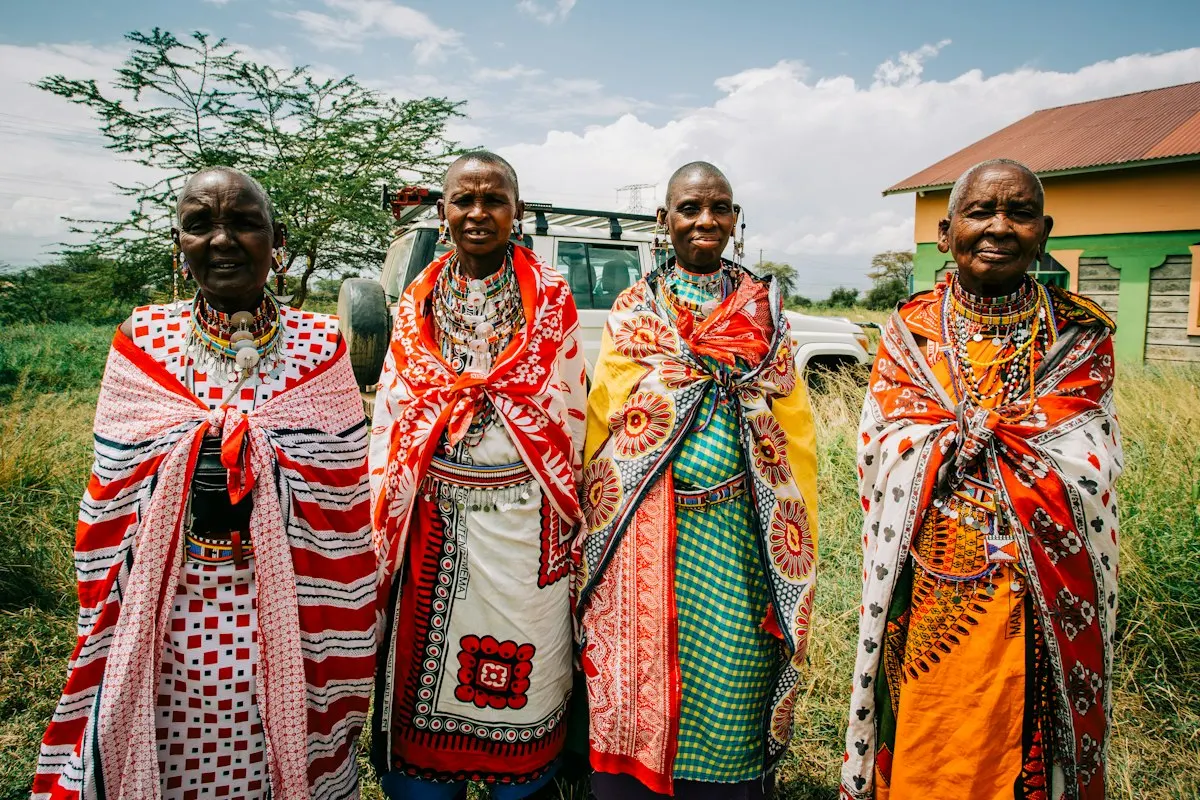
Photo: WyteShot on Unsplash.
How much does an aso-oke gele cost?
An aso-oke gele usually comes as part of a set. A complete bridal aso-oke set (iro, buba, gele and ipele) costs about ₦30,000 to ₦80,000 machine-woven and ₦80,000 to ₦250,000 hand-woven in 2026. A ready-made aso-oke auto gele was listed on Jiji at ₦25,000 on 5 November 2026.
Those set prices come from our aso-oke price guide and the bridal traditional outfit guide. If the family has chosen aso-oke as the aso-ebi, the gele normally comes from the same fabric, so you don't buy it separately.
Aso-oke is the one to choose when you want the tall, sculpted shape that reads from the back of the hall. A stiff aso-oke gele can be tied into a big fan and stay that way until the last dance. A soft one starts drooping by the cake cutting.
Is auto gele worth it?
For guests, often yes. An auto gele costs about ₦10,000 to ₦35,000, goes on in seconds, survives dancing and can be worn again. The trade-off is a fixed shape: it can't be matched to the exact fabric of an aso-ebi unless you have one made from it, and up close it looks slightly less crisp than a hand-tied gele.
When an auto gele makes sense:
- You're a guest at several weddings this season and don't want to pay for tying every time.
- You'll be travelling or dressing in a car. No gele tier needed on the day.
- You're buying for children. Children's auto gele was ₦3,000 to ₦4,000 on Jiji.
When it doesn't: if you're the bride, the bride's mother or in the front row of family photos. That's where a hand-tied gele from a good tier earns its money. My honest take: for the bride, this is not the place to save ₦15,000.
Some sellers will turn your own aso-ebi fabric into an auto gele for a fee, which gets you the matching look plus the convenience. Ask before the wedding week; they need a few days.
How much does gele tying cost in Nigeria?
Expect about ₦3,000 to ₦12,000 for a guest's gele tied on the day in most cities, up to ₦30,000 for a popular tier. Bridal gele tying usually costs ₦15,000 to ₦50,000, more for a celebrity tier in Lagos. Many makeup artists bundle gele into their package.
Where those figures come from:
| Who | Typical cost (2026) | Source |
|---|---|---|
| Guest, budget | ₦3,000–₦6,000 | Our aso-ebi cost guide |
| Guest, mid-range | ₦7,000–₦12,000 | Our aso-ebi cost guide |
| Guest, premium tier | ₦15,000–₦30,000 | Our aso-ebi cost guide |
| Bride | ₦15,000–₦50,000 | Our bridal traditional outfit guide |
| Makeup and gele together | ₦8,000–₦80,000 on Jiji, 5 Nov 2026 | Jiji listings |
If you're booking for a group (a bridal train or the bride's family), ask the tier for a group rate and agree how many heads they can do per hour. A tier who can tie one gele in ten minutes still needs two hours for twelve women, and nobody wants to arrive after the couple's entrance. Our bridal makeup cost guide covers what a full bridal beauty package includes.

Photo: Eva Blue on Unsplash.
Which gele should you wear to a wedding?
Wear whatever the family's aso-ebi uses if you bought it. If not, match the formality: aso-oke or sego for a Yoruba traditional wedding or a big owambe, damask or an imported headtie for church and evening receptions, and an auto gele or turban when comfort matters more than height.
A few rules of thumb that save embarrassment:
- Don't outsize the bride. A gele so tall it blocks the photographer's view of the high table won't win you friends.
- Match colours to the occasion. Families often announce the colour with the aso-ebi; if you're not in the aso-ebi, pick a colour that complements it rather than clashing with it.
- Think about the venue. A tall, stiff gele under a low canopy is awkward. Outdoors in the wind, a tighter wrap holds better.
- Bring pins. Even the best gele needs a few by the evening.
More on what else to wear, for women and men, is in our wedding guest outfit guide.
Frequently asked questions
How much is gele in Nigeria?
On Jiji on 5 November 2026, ready-made auto gele asked about ₦5,000 to ₦50,000, sego gele ₦5,000 to ₦30,000, damask gele ₦20,000 and imported "Swiss" or "Dubai" headtie fabric ₦30,000 to ₦100,000. Tying on the day costs extra, usually ₦3,000 to ₦12,000 for a guest.
What is sego gele?
Sego gele (also spelled sago) is a stiff, shiny headtie fabric sold on its own, popular because it holds a tall fan shape well and doesn't collapse during the party. It's usually cheaper than aso-oke, with Jiji listings from ₦5,000 to ₦30,000 in November 2026.
What is auto gele?
Auto gele is a gele that's already tied and sewn into shape on a base, so you wear it like a cap. It saves paying a tier on the day and survives dancing. Adult auto gele costs about ₦10,000 to ₦35,000 in most listings, and children's versions about ₦3,000 to ₦4,000.
How much does it cost to tie gele?
For a guest, about ₦3,000 to ₦12,000 in most cities, and up to ₦30,000 for a sought-after tier. Bridal gele tying costs about ₦15,000 to ₦50,000, more for celebrity tiers in Lagos. Many makeup artists include gele in a makeup package.
What do Igbo people call gele?
Igbo women call the head tie ichafu. The style is often softer and wrapped differently from a Yoruba gele, though plenty of Igbo brides and guests now wear the big Yoruba-style fan too, especially at receptions. Hausa women's head tie is called kallabi.
Sorting the rest of the outfit? Read the aso-ebi cost guide before you buy fabric, and browse all planning guides for the other line items.