Mother of the Bride Outfits in Nigeria 2026
Styles & Cost
At a Nigerian wedding, the bride's mother usually wears two outfits: a full traditional look for the engagement (aso-oke, lace or george, depending on the family) and a softer, elegant outfit for the church service and reception. Fabric plus tailoring comes to roughly ₦57,000 to ₦105,000 per look for mid-range cotton lace in 2026, and ₦210,000 to ₦460,000 for premium French lace or hand-woven aso-oke, before gele, coral beads, shoes and makeup.
She's the second most photographed woman in the room. Usually the busiest, too, because she's greeting every aunty who walks in. So the outfit has to look rich, sit comfortably for eight hours and survive dancing. Below are the styles that work for each ceremony, what the fabrics and extras cost, and a timeline.
What does the mother of the bride wear to a Nigerian wedding?
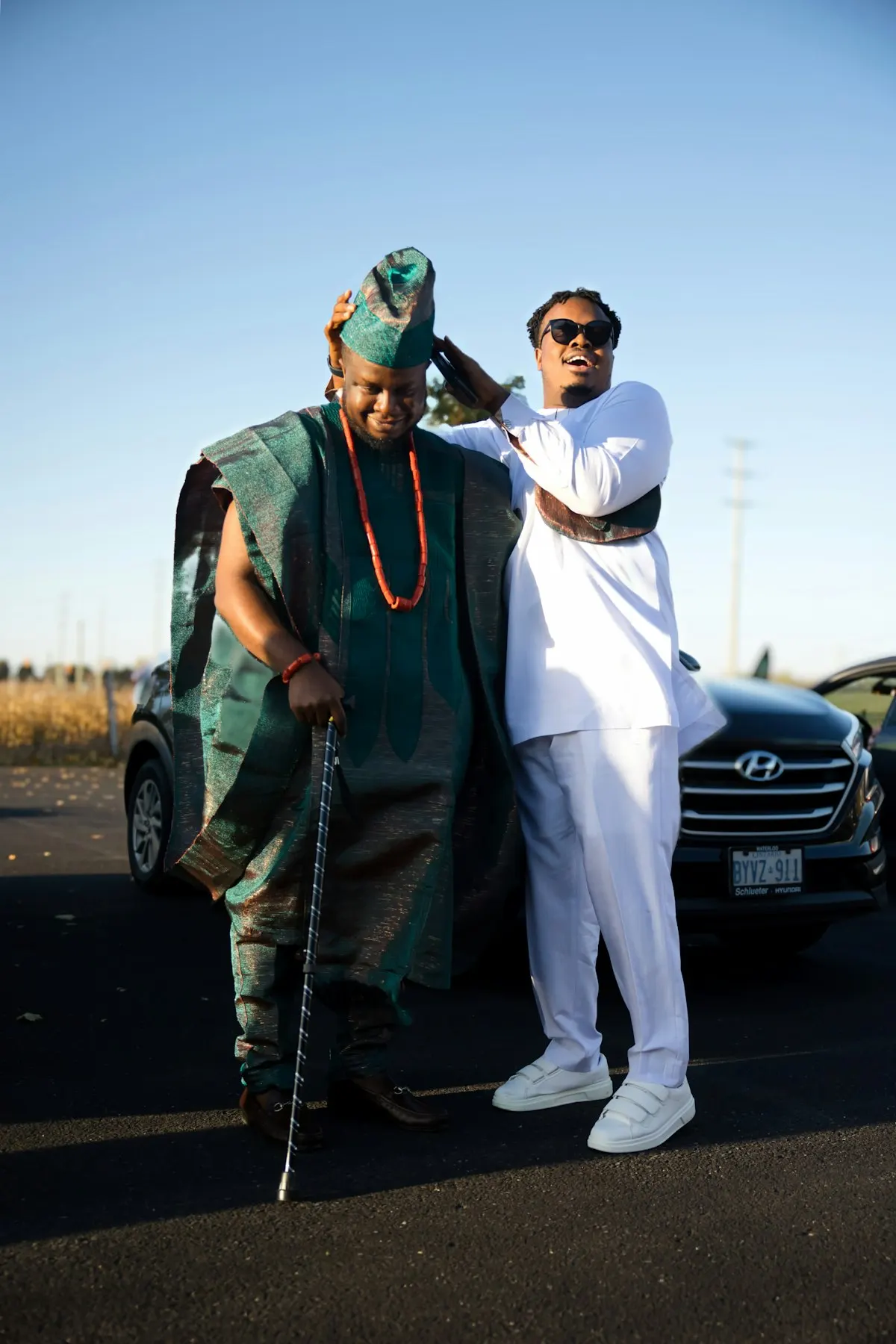
For the traditional engagement, she wears the family's chosen traditional outfit: iro and buba with aso-oke or lace for Yoruba families, a george wrapper and blouse for Igbo and Delta families, or an embroidered kaftan or atamfa for Hausa families. For church, she usually wears a lace or crepe gown, skirt suit or a lace iro and buba.
| Ceremony | Popular looks | Fabric | Headwear |
|---|---|---|---|
| Yoruba engagement (idana) | Iro, buba and ipele | Hand-woven or machine aso-oke, lace | Large gele, often matching the aso-oke |
| Igbo traditional wedding (igba nkwu) | Double wrapper with lace or george, blouse | George, lace, sometimes Hollandais | Gele; coral beads are common |
| Edo or Delta traditional wedding | Wrapper and blouse | George, coral-heavy styling in Edo families | Gele or a beaded headpiece |
| Hausa or Fulani wedding | Kaftan, abaya-style gown or atamfa set | Embroidered fabric, atamfa, lace | Matching head scarf or gele |
| Church service | Fitted lace gown, skirt suit, or lace iro and buba | Lace, crepe, satin | Gele, fascinator or a hat |
| Reception (if changing) | Flowing kaftan or a lighter gown | Chiffon, crepe, lighter lace | Softer gele or a turban |
Our guides to traditional marriage outfits for brides and Urhobo attire show how the bride's own look is put together, which helps the mother coordinate without copying.
Should the mother of the bride match the bride or the family aso-ebi?
Usually she matches the family aso-ebi colour, not the bride. The bride stands out on her own; the mother anchors the bride's side of the family in photos. Many mothers choose the same colour as the family but in a richer fabric, or add a gold or coral accent nobody else is wearing.
A few rules families tend to follow:
- Don't wear the bride's colour on the bride's main outfit. If the bride's engagement aso-oke is wine, mum wears the family colour or a tone that sits beside it, not identical wine.
- Coordinate with the groom's mother. Some families agree complementary colours so the two mothers look good side by side. A WhatsApp message three months out saves an awkward photo.
- Church first, fashion second. If the parish is strict about shoulders, plan a sleeve or a shawl from the start.
If the family hasn't picked colours yet, our wedding colour combinations list palettes with hex codes your fabric seller can match.

Photo: Nataliya Melnychuk on Unsplash.
How much does a mother of the bride outfit cost in Nigeria?
On our existing 2026 aso-ebi ranges, a mid-range lace or george look costs about ₦45,000 to ₦80,000 in fabric plus ₦12,000 to ₦25,000 tailoring, and a premium French lace or hand-woven aso-oke look ₦180,000 to ₦400,000 in fabric alone. Coral beads, gele, shoes and makeup can add as much again.
| Item | Mid-range | Premium | Where the figure comes from |
|---|---|---|---|
| Cotton lace (per set) | ₦45,000–₦80,000 | ₦90,000–₦150,000 | Our aso-ebi cost guide |
| French or Swiss lace (per set) | ₦90,000–₦150,000 | ₦180,000–₦350,000 | Aso-ebi cost guide |
| George (5–6 yards) | ₦60,000–₦120,000 | ₦150,000–₦300,000 | Aso-ebi cost guide |
| Hand-woven aso-oke (3 pieces) | ₦90,000–₦180,000 | ₦200,000–₦400,000 | Aso-ebi cost guide |
| Tailoring | ₦12,000–₦25,000 | ₦30,000–₦60,000 | Aso-ebi cost guide |
| Gele (fabric or auto gele) | ₦10,000–₦35,000 | ₦30,000–₦100,000 | Our gele types and prices |
| Makeup | ₦25,000–₦60,000 | ₦80,000–₦150,000 | Aso-ebi cost guide (guest makeup) |
One thing that catches families out: in many traditional lists, fabric for the bride's mother is something the groom's family brings. Our traditional marriage list has that item at ₦30,000 to ₦150,000. Check the list before buying, or she may end up with two sets of the same lace.
Which accessories finish a mother of the bride look?
The usual finishing pieces are a well-tied gele, coral or gold jewellery, a matching clutch, comfortable heels and a hand fan. Edo, Igbo and Delta mothers often wear coral beads; Yoruba mothers often carry an ipele over the shoulder. Pick two statement pieces, not five.
On 8 November 2026, a Jiji search for "mother of the bride" mostly turned up accessories rather than outfits. Asking prices included:
| Jiji listing (8 Nov 2026) | Asking price |
|---|---|
| Fascinator, made in your colour | ₦10,000 |
| Handmade bridal hand fan (described for brides and mothers) | ₦35,000 |
| Swiss voile, 5 yards | ₦35,000 |
| Guipure lace, sold as aso-ebi fabric | ₦72,000 |
| Coral bead set (long necklace and two bracelets) | ₦155,000 |
| Coral bead set, traditional style | ₦190,000 |
Again, these are asking prices from public listings, not sold prices, and a small sample. Real coral and good imitations look alike in photos. If you're paying coral prices, buy from someone you trust or a seller who'll let you inspect the beads first.
When should the mother of the bride start sewing her outfits?
Buy fabric about three months before the wedding and get it to a trusted tailor at least eight weeks out, with a fitting three weeks before. For December weddings, start a month earlier, because good tailors stop accepting orders well before Christmas. Our December wedding guide explains why the season gets so tight.
My mild opinion: pay for one fitting more than you think you need. Mum will spend the day standing, sitting, hugging and dancing, and the outfit that fitted perfectly on a hanger is not the one she'll be wearing at 6pm.
Mother of the bride checklist
- Confirm ceremony dates and the family colours (12 weeks out)
- Check the traditional list: is the groom's family bringing her fabric?
- Agree colours with the groom's mother
- Buy fabric for each look from one seller and one batch (10–12 weeks)
- Fabric to the tailor with a firm delivery date (8 weeks)
- Book gele tying and makeup for each day; confirm the time in writing
- First fitting (3 weeks); final try-on with shoes and jewellery (1 week)
- Day bag: hand fan, tissues, blotting paper, safety pins, flat shoes, phone power bank
Frequently asked questions
What should the mother of the bride wear to a Nigerian traditional wedding?
She usually wears the family's traditional outfit in the chosen aso-ebi colour: iro and buba with aso-oke or lace for Yoruba families, a george wrapper and blouse for Igbo and Delta families, or an embroidered kaftan or atamfa set for Hausa families, finished with a gele and jewellery.
How much should a mother of the bride outfit cost in Nigeria?
On our 2026 ranges, fabric plus tailoring is roughly ₦57,000 to ₦105,000 for mid-range cotton lace and can pass ₦400,000 for premium French lace or hand-woven aso-oke. Gele, coral beads, shoes and makeup come on top.
Can the mother of the bride wear the same colour as the bride?
It's usually avoided for the bride's main outfit, so the bride stands out. Most mothers wear the family aso-ebi colour, often in a richer fabric, or a tone that sits next to the bride's colour without matching it exactly.
Who pays for the mother of the bride's outfit?
Usually she does, or the bride's family. In many traditional ceremonies, though, the groom's family brings fabric for the bride's mother as part of the marriage list, so check the list before she buys her own.
How many outfits does the mother of the bride need?
Most need two: a traditional outfit for the engagement and a gown, skirt suit or lace iro and buba for church. Some change again for the reception, especially at large weddings with a long programme.